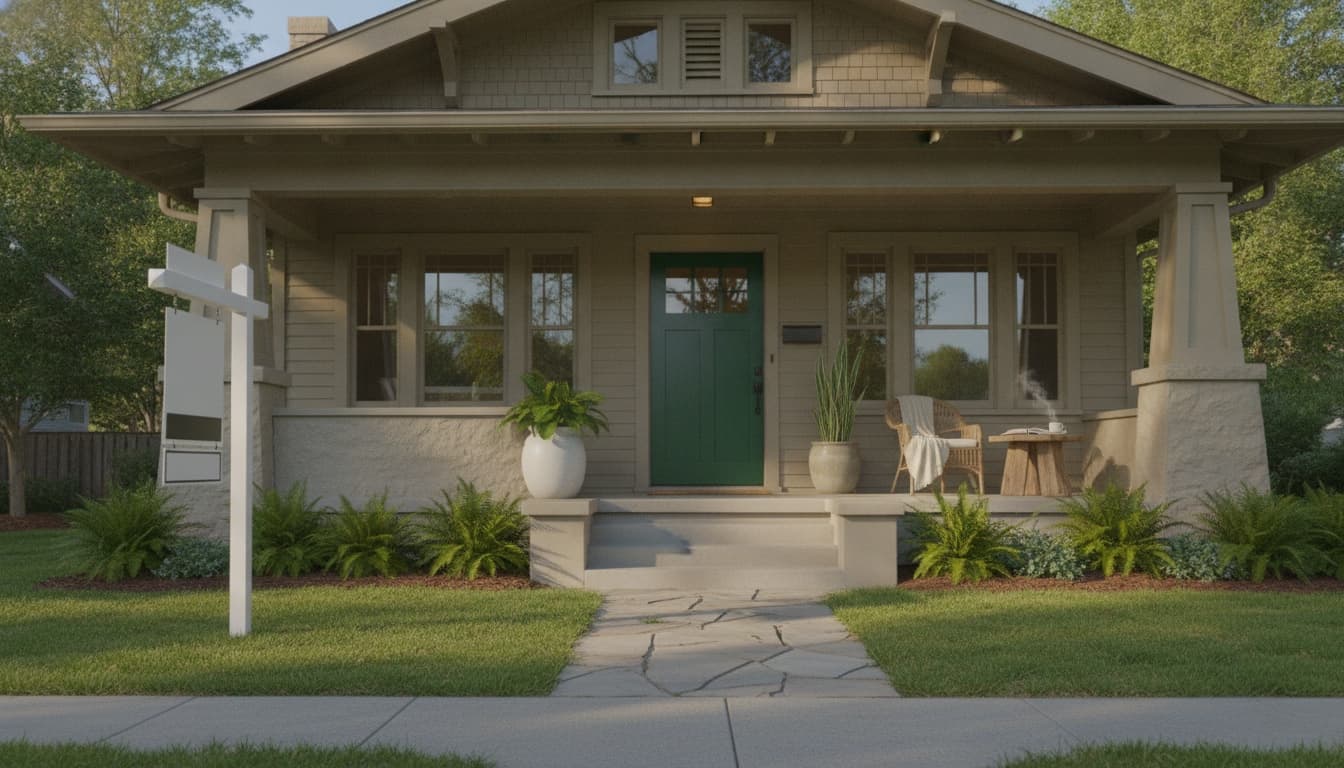
 Property Listing Promotion
How to sell a house faster with marketing: the 72-hour move that matters most
Days-on-market is set in the first 72 hours. Here's the marketing sequence that gets your listing to the right buyers before the algorithm loses interest.

Emily's listing has been on the market for 22 days. The comp across the street closed in 8. Same price bracket, same square footage, same school district. What's different?
The honest answer, most of the time, is not the property. It's what happened in the first 72 hours after the listing went live. Portal algorithms boost new inventory on a decaying curve; buyers arrive to a portal in decaying waves as saved-search alerts fire; and every listing has a first-impression window that either lands or doesn't. Miss the 72 hours and the listing spends the rest of its life on the market recovering from the miss.
This post covers the marketing sequence that compresses days-on-market. Not price, which is a separate conversation; not staging, which is upstream of marketing; but the marketing moves within your control that either capture the first-impression window or don't.
Can marketing actually reduce days-on-market on a fairly-priced listing?
Yes, meaningfully. Price sets the ceiling on how fast a listing can sell; marketing determines whether you hit that ceiling or fall 15-30 days below it. On a correctly-priced listing, tight first-72-hours marketing is the difference between a 10-day sale and a 30-day sale.
The four factors that compress days-on-market
Every fast-selling listing does these four things in the first 72 hours. Every stalled listing missed at least one.
Right buyers reached first. The saved-search list on your CRM and your WhatsApp buyer groups are warmer than any social feed. They already told you they're looking. Reaching them within hours of MLS activation puts your listing in front of intent-heavy buyers before the general pool arrives. Most agents skip this step because it feels less exciting than posting a Reel; the math says it's the highest-conversion channel per hour spent.
First impression matches reality on the click-through. The listing card is the promise; the listing page is the proof. If the buyer clicks a strong Spotlight video and lands on a page with mediocre photos and no walkthrough, they leave and don't come back. Days-on-market extends by every buyer who arrives once and doesn't return.
Response time under six hours on inbound interest. The first 24 hours after activation generate the highest concentration of showing requests, DMs, and inquiries. Agents who respond within six hours book more showings from the same inbound volume. Agents who respond in 48 hours convert those inquiries at half the rate. Speed is a marketing move, not just an operations one.
Distribution across all four surface types on Day 0, not staggered. Listing card, social feed, listing page, email. All four surfaces on Day 0. Staggering them across the week means each subsequent surface reaches buyers who already saw the listing on a previous surface and moved past it. Same content, different timing, dramatically different first-impression concentration.
The urgency of the compressed window
Auctions at Sotheby's and Christie's aren't slow because time is the enemy of price. The English auction format compresses bidding into a bounded window on purpose, so that scarcity, visible competition, and a hard deadline drive faster decisions and higher final prices than a fixed-price sale ever would. A listing has a softer version of the same mechanic. The first 72 hours are your auction window: highest attention, most saved-search alerts firing, algorithm boosting hardest. What you do in that window shapes the price and the days-on-market that come after it, in that order.
The 72-hour ship plan
- 1
Hour -24: prep the assets before the listing goes live
Generate your three video formats (Spotlight, Highlight Reel, Cinematic Tour). Cull your listing photos to your strongest eight to twelve. Write your MLS description with the standout feature in the first sentence. Draft the WhatsApp message and the email subject line. Everything ready to send the moment the MLS status changes to active.
- 2
Hour 0: MLS goes active — trigger all four surfaces within 90 minutes
Post to Instagram Reels and TikTok. Send the WhatsApp message to your buyer groups. Send the email to your saved-search list. Confirm the listing card thumbnail is showing the Spotlight video on Zillow and Redfin. This all happens in one focused 90-minute block, not stretched across the week.
- 3
Hour 6: check response and reply to every inbound within the same window
By hour 6 you should have DMs, saved-property alerts triggering, maybe a showing request or two. Reply to every one. Speed of response in this window is directly correlated with showings booked. Do not save inbound for tomorrow; tomorrow the algorithm has moved on.
- 4
Hour 24: post the second-day recap and re-share to your top 20 warm leads
One repost with a specific angle (a room close-up, a neighborhood detail, a price justification if the price is competitive). Then a targeted note to your top 20 warmest buyer leads: 'Thought you specifically might want to see this one because [reason].' Named, warm, personal. Not a broadcast.
- 5
Hour 48: run the pre-open-house push if the open house is on the weekend
Repost the Highlight Reel with an OPEN HOUSE overlay showing date and time. Email reminder to the saved-search list. WhatsApp reminder to the interested buyers who DMed on Day 0 or 1. Every touch is a re-engagement to the buyers who saw it early but haven't committed to a showing.
- 6
Hour 72: check the two metrics that tell you whether the window landed
Views per day on the listing page and saved-property count. If both are trending down from Day 0's peak, that's normal. If both are near zero already, the marketing hit didn't land — repost to a fresh angle, re-message the buyer groups, and consider a price adjustment conversation with the seller. Don't wait until Day 14 to notice.
The four ways listings stall
Most stalled listings did the same handful of things wrong in the first 72 hours. Cross-check against these before you conclude the price is the problem.
Why listings stall: the four common misses
If you did these, the window worked
- Video ready and posted within 90 minutes of MLS activationEvery hour of delay past that is boost curve lost
- Saved-search list and WhatsApp buyer groups notified same day, personallyWarm audience > cold algorithm every time
- Listing page has an embedded walkthrough above the photo galleryBuyers scroll past photo galleries; they stop for motion
- First DM, inquiry, and showing request replied within six hoursResponse time is a first-72-hours marketing decision
If you missed these, days-on-market extended by weeks
- Video shipped on Day 4 because it was 'still being edited'The 72-hour window is over. The video now competes for a share of buyer attention that has moved on.
- Reels posted, but WhatsApp buyer groups skipped or delayedThe warm-audience omission is the single most common days-on-market extender
- Same content pasted across every surfaceMLS wants a factual description. Reels want a hook. Email wants a reason. Same asset, different framing per surface.
- Open house announced only 24 hours before, with no video previewFoot traffic is downstream of the pre-open-house push in the 48 hours before
Where Dunphy fits
Dunphy is the AI video agent for real estate. Video prep is the single most-often-delayed step in the 72-hour window; agents skip Day 0 posts because the videographer's Cinematic Tour won't be ready until Day 5. Dunphy takes video off the critical path. Photos in on the morning the MLS goes active, three formats out in minutes: Spotlight for the listing card, Highlight Reel for social, Cinematic Tour for the listing page. Day 0 posts ship on Day 0.
Spotlight
Listing card · MLS thumbnail
The 72-hour plan above is what most agents already know they should be doing. What blocks it is usually not knowledge, it's the tooling that makes each step ship on time.
What speed can't fix
Speed doesn't overcome pricing that's fundamentally wrong. Speed doesn't overcome a property with hidden condition issues. Speed doesn't make a bad neighborhood into a great one.
What speed does do: it makes sure a correctly-priced, well-presented listing hits the buyers who would want it before the algorithm moves them to someone else's listing. That's the marketing lever you actually control. Everything else is upstream.
For the listing-differentiation work that sits alongside speed, our guide on how to make real estate listings stand out covers the visual and copy craft that determines whether the buyers who arrive convert once they do.
Frequently asked questions
What is the average time to sell a house with marketing versus without?
Can I sell a house in under a week with marketing?
Should I stage the property to sell faster?
What's the ROI of a videographer versus AI video for sell-faster marketing?
How do I know if my marketing worked in the first 72 hours?
Further reading
National Association of REALTORS®
Profile of Home Buyers and Sellers
Annual survey of how US buyers and sellers behave through the transaction.
Realtor.com Economic Research
Realtor.com Research
Listing-side data: days-on-market, inventory, search behavior at scale.
Zillow Group
Zillow Research
Buyer-side housing trends, search behavior, and market analysis from the largest US listing portal.
Wikipedia
English auction
Encyclopedia entry on the open-ascending auction format used at Sotheby's, Christie's, and eBay. The time-bound window and visible competition drive faster decisions and higher final prices than a fixed-price sale.
Ship Day 0 marketing without waiting for the videographer. Turn photos into three surface-shaped videos in minutes and capture the first-impression window.

Written by
Matthew JohnCo-founder & CEO, Typito AI
Co-founder and CEO at Typito AI. I've been dabbling with video storytelling for 15 years and every day on the journey has been exciting. At Typito we're building Dunphy — the AI video agent for real estate — alongside the broader Typito video stack. Writing here about real-estate marketing, video, and integrity in AI-generated content.